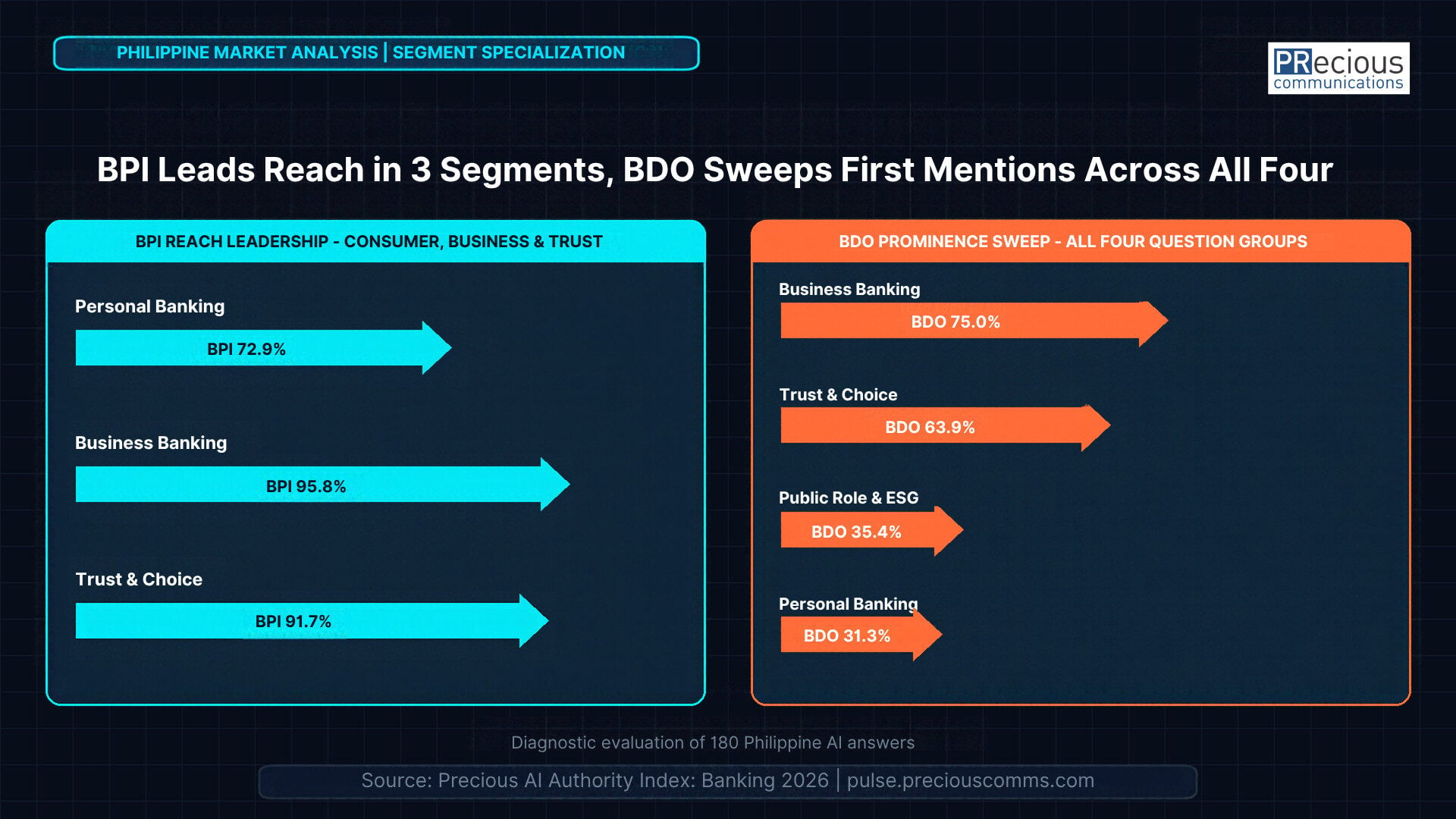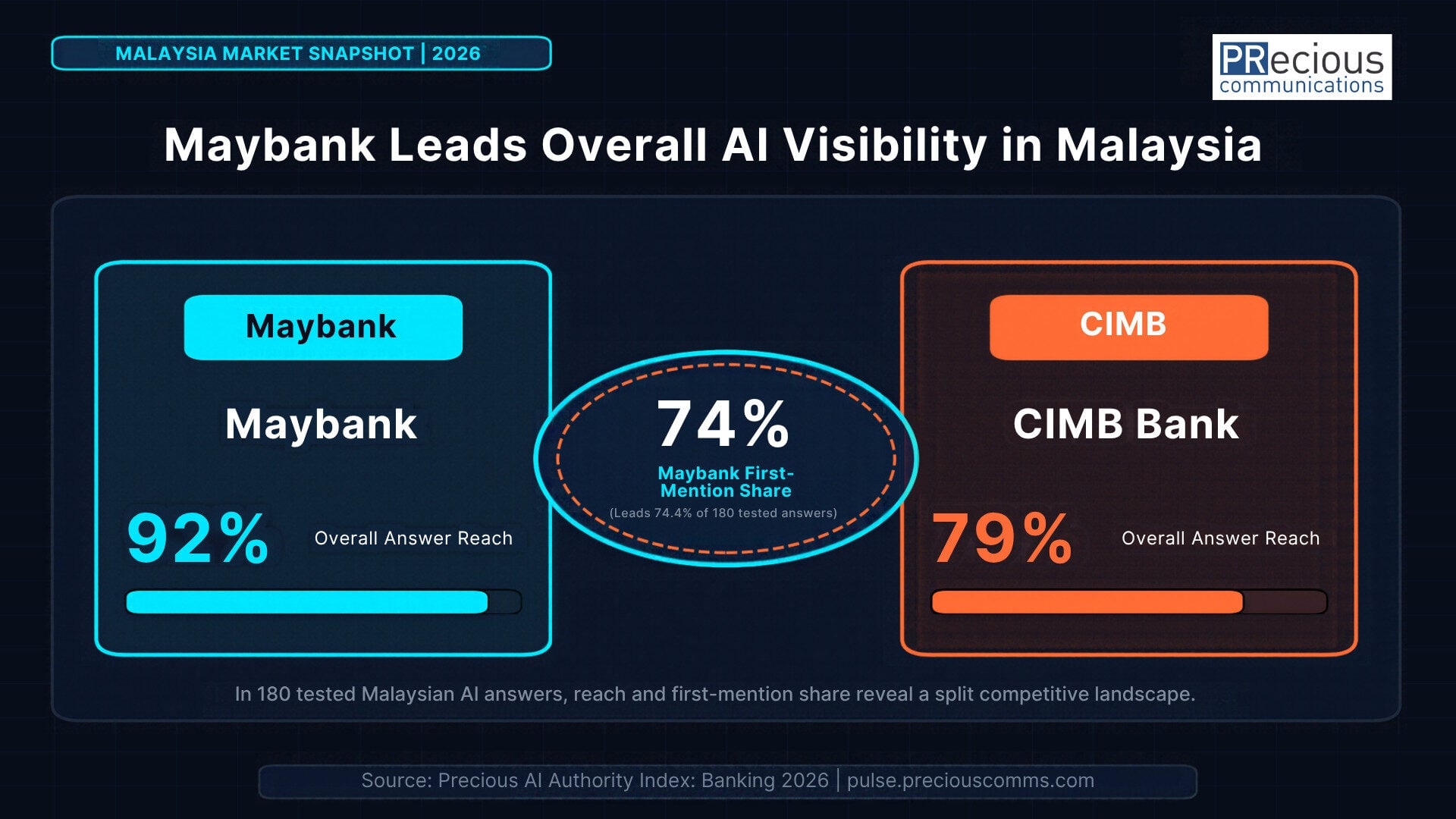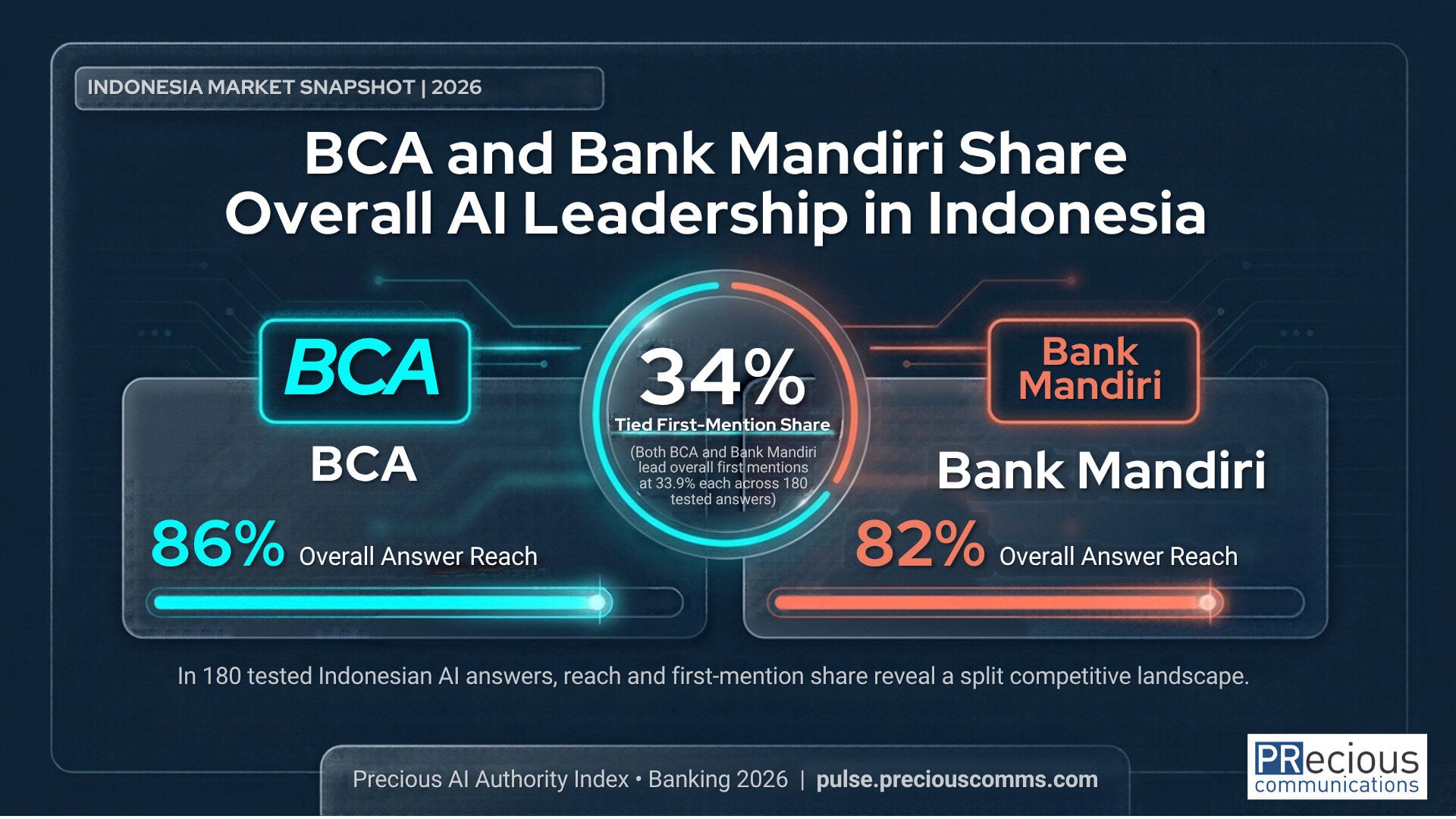
As business landscapes transition into a highly automated era of discovery, the core mechanics of corporate reputation are undergoing a paradigm shift. Traditional Search Engine Optimization (SEO) metrics are giving way to conversational engine optimization, transforming large language models (LLMs) into the primary algorithmic gatekeepers of buyer intent. For B2B, corporate, and deep-tech brands expanding across Southeast Asia, this shift introduces an immediate operational vulnerability: The AI Visibility Crisis.
When procurement teams in Jakarta, financial officers in Bangkok, or institutional investors in Kuala Lumpur prompt an AI system to evaluate or recommend vendors within your specific market category, does your organization surface? If your executive board remains uncertain, that ambiguity is itself the strategic risk.
In this landscape, legacy marketing playbooks—reliant on volume-based media buys, sponsored reach, and superficial superlatives—fail entirely. Algorithms require objective, structured, and data-dense validation to calculate enterprise credibility. To maintain market share, progressive leaders must claim their “Fifth Seat” at the corporate strategy table, actively measuring their regional AI Share of Voice and overhauling their content frameworks to satisfy modern algorithmic crawlers.
Below is the complete analysis by PRecious Communications’ Founder and Group CEO, Lars Voedisch, originally featured on Forbes, breaking down the exact strategic mandates required to future-proof regional authority and ensure your enterprise remains legible in an AI-mediated information ecosystem.
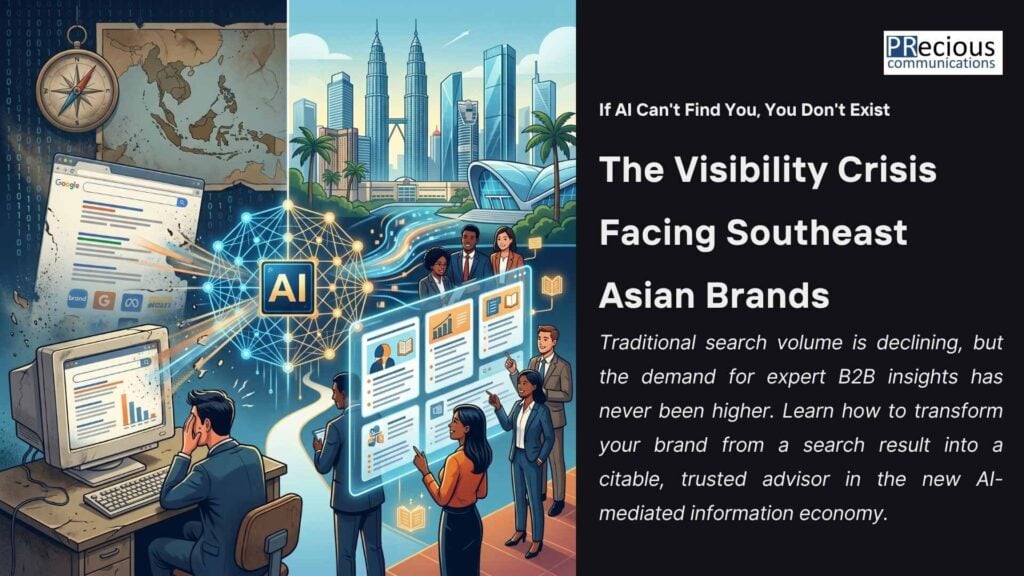
There’s a question I’ve been asking CEOs and CMOs across Southeast Asia for the past year, and it reliably produces the same response: a pause, a slight frown and something close to discomfort.
“If a procurement manager in Jakarta, or a CFO in Bangkok or an investor in Kuala Lumpur asked an AI system to recommend a company like yours, right now, in your market, would your brand come up?”
Most don’t know. That uncertainty is itself the answer.
The Ground Has Already Shifted
Search is no longer exclusively a human behavior directed at a search engine. Increasingly, it is a conversation with an AI system that synthesizes available information and produces a recommendation. The brands that get recommended are not necessarily the biggest or the best-funded. They are the ones whose authority is legible to a machine.
Forrester’s research found that 94% of B2B buyers now use AI in their purchase process. Twice as many buyers ranked generative AI or conversational search as “a more meaningful or important source of information” than other sources, such as vendor websites and sales representatives.
Southeast Asia Is Exposed
Southeast Asia is not a single information environment. It is six to 10 distinct digital ecosystems, each shaped by its own language hierarchies, media trust patterns and platform behaviors. A brand with strong visibility in English-language AI responses may be essentially absent from what those same systems surface in Indonesian, Thai, Vietnamese or Tagalog.
I see this regularly. A company with genuine market leadership surfaces poorly or inconsistently when an AI system is asked to evaluate vendors in its category within a specific Southeast Asian market. The company exists in the market. It does not yet exist in the AI’s understanding of that market.
Paid Media Cannot Solve This
There is a tempting instinct to treat AI visibility as a media buying problem. It is not.
Analysis of over a million links cited in AI responses across ChatGPT, Claude, Gemini and Perplexity found that over 95% came from non-paid sources. Journalistic content alone accounted for over a quarter of all citations. Paid placements barely register.
This reflects something fundamental about how AI systems evaluate credibility. An independent journalist’s analysis signals external validation. A sponsored article in the same publication signals nothing of the kind. A decade of marketing orthodoxy, buying placement, scaling reach and optimizing the algorithm does not transfer to this environment.
The Control Instinct Is Now a Liability
Many senior leaders in this region, particularly in regulated industries or politically sensitive environments, have developed a deep instinct toward communication restraint. Say less. Control the message. Publish only what is necessary. In a media environment where silence was neutral, this made sense.
That calculus has inverted. In an AI-mediated information environment, silence is an absence of signal. AI systems that lack credible, substantive content about a brand either omit it entirely or fill the gap with whatever they can find, which may bear little resemblance to the organization’s actual position or capability.
The question has changed. It is no longer only “What could go wrong if we publish this?” It is also “What market position are we ceding by not publishing?” Both carry real risk. The second is the one fewer boards are asking.
This Is the Mandate for Leaders Who Want To Stay Visible
Three shifts are nonnegotiable.
Treat AI share of voice as a core business metric. Do not wait for quarterly reviews. Run frequent, structured queries across the major AI models for your product category, specifically in your target APAC markets and in the local languages your buyers actually use. If you are not tracking how AI systems describe and recommend your brand, you are managing a reputation you cannot see.
Overhaul the content architecture. AI models favor objective, structured, data-rich material over vague corporate claims. Invest in white papers, deeply researched commentary and case studies built around hard statistics and independently verifiable outcomes. Genuine analysis with specific numbers and third-party validation is what gets cited. Superlatives are invisible.
Rebalance the budget mix. As paid search yields diminishing returns against falling traditional search traffic, the logical reallocation is toward earned media and strategic PR. The signals that feed AI recommendations are earned signals, and organizations still directing the majority of their communications budget toward paid channels are investing in a channel that AI largely ignores.
The brands building these capabilities now will have a meaningful head start. The ones waiting for proof that this matters are already behind.
Make Your Presence Visible to AI
When business buyers are reaching for an AI interface before a search bar, the most important communications investment available is building the presence and credibility that lets AI systems accurately represent and confidently recommend you.
If an AI agent cannot find you, you do not exist in the market. The longer that gap remains, the more expensive it becomes to close.
Is your brand optimized for the age of conversational search?
Don’t wait for your market position to be redefined by algorithms. Audit your AI Share of Voice to ensure your enterprise remains a trusted, top-of-mind recommendation in your category. Contact us today to start your strategy session.
Contact the PRecious team today to discuss your communications strategy.