As organizations navigate a business environment defined by macroeconomic compression, rapid technological change, and evolving stakeholder expectations, communications is becoming increasingly intertwined with business performance. What was once viewed primarily as a support function is now an essential engine influencing how organizations attract customers, build trust, strengthen market relevance, and position themselves for growth.
In the Philippines, H2 2026 is characterized by a “wait-and-see equilibrium.” Geopolitical energy shocks and domestic infrastructure pullbacks have driven corporate leadership away from raw volume expansion and toward defensive capital preservation. Consequently, the ability to shape perception, verifiable credibility, and stakeholder confidence will become a critical competitive advantage.
According to Paolo Alba, Regional VP & Country Lead (Philippines) at PRecious Communications, the most significant shift organizations are facing is the growing recognition that communications is no longer separate from business strategy.
“The organizations that will stand out in the coming years will be those that recognize communications as a business growth driver rather than a visibility exercise. Reputation, trust, and relevance are becoming strategic assets that directly influence competitiveness, stakeholder confidence, and long-term success.”

Against this backdrop, PRecious Philippines identifies five shifts that are expected to redefine how organizations approach communications and business priorities in H2 2026.
Communications Moves Closer to Revenue Conversations
For years, communications success was largely measured through visibility and vanity metrics such as media coverage, impressions, and share of voice. While these indicators remain relevant, business leaders facing severe budget scrutiny are increasingly looking beyond outputs.
In H2 2026, communications teams will find themselves more closely involved in discussions around customer acquisition, market expansion, talent attraction, investor confidence, and stakeholder engagement. Organizations will place greater emphasis on demonstrating how reputation-building efforts support broader business objectives.
Regional Thinking Becomes the Default for “Local” Brands
The distinction between local and regional competition is becoming increasingly blurred. Digital platforms have expanded the range of brands, ideas, and conversations that consumers encounter daily. To survive the influx of well-capitalized international, digital-first competitors, a company operating within a single market is no longer competing solely with local peers; it is competing for attention against organizations across the region and beyond.
In response, more businesses will adopt a regional mindset when shaping their communications strategies. This requires organizations to develop narratives that are rooted in local realities while remaining relevant to broader regional audiences.
For instance, while the Philippine market demands emotional storytelling and relational trust (tiwala), neighboring markets like Indonesia require deep respect for social hierarchies, and Vietnam necessitates a mastery of indirect, harmony-focused stakeholder communication. The brands that succeed will be those that can maintain this cultural authenticity while demonstrating their place within larger industry and market conversations.
Visibility Becomes Intentional, Not Always-On
For much of the digital era, brands have operated under the assumption that maintaining a constant presence is necessary to remain relevant. However, the massive integration of generative AI tools has led to an overproduction of generic marketing copy, creating a phenomenon of “AI slop” that has induced profound consumer content fatigue.
In the months ahead, organizations will become more selective about when and how they engage in public conversations. Instead of pursuing continuous exposure, they will prioritize strategic, intentional visibility, focusing on moments and bespoke narratives that reinforce expertise and travel organically through niche communities.
Furthermore, as the traditional search funnel collapses into conversational AI recommendations, communications must shift toward Generative Engine Optimization (GEO) and “zero-click PR”. Because audiences rarely click through external links from AI overviews, PR professionals must ensure their core thesis is positioned at the absolute beginning of all releases to capture fragmented attention. Organizations that focus on quality, authority, and consistency of message will be better positioned to stand out.
Trust Signals Replace Traditional Brand Building
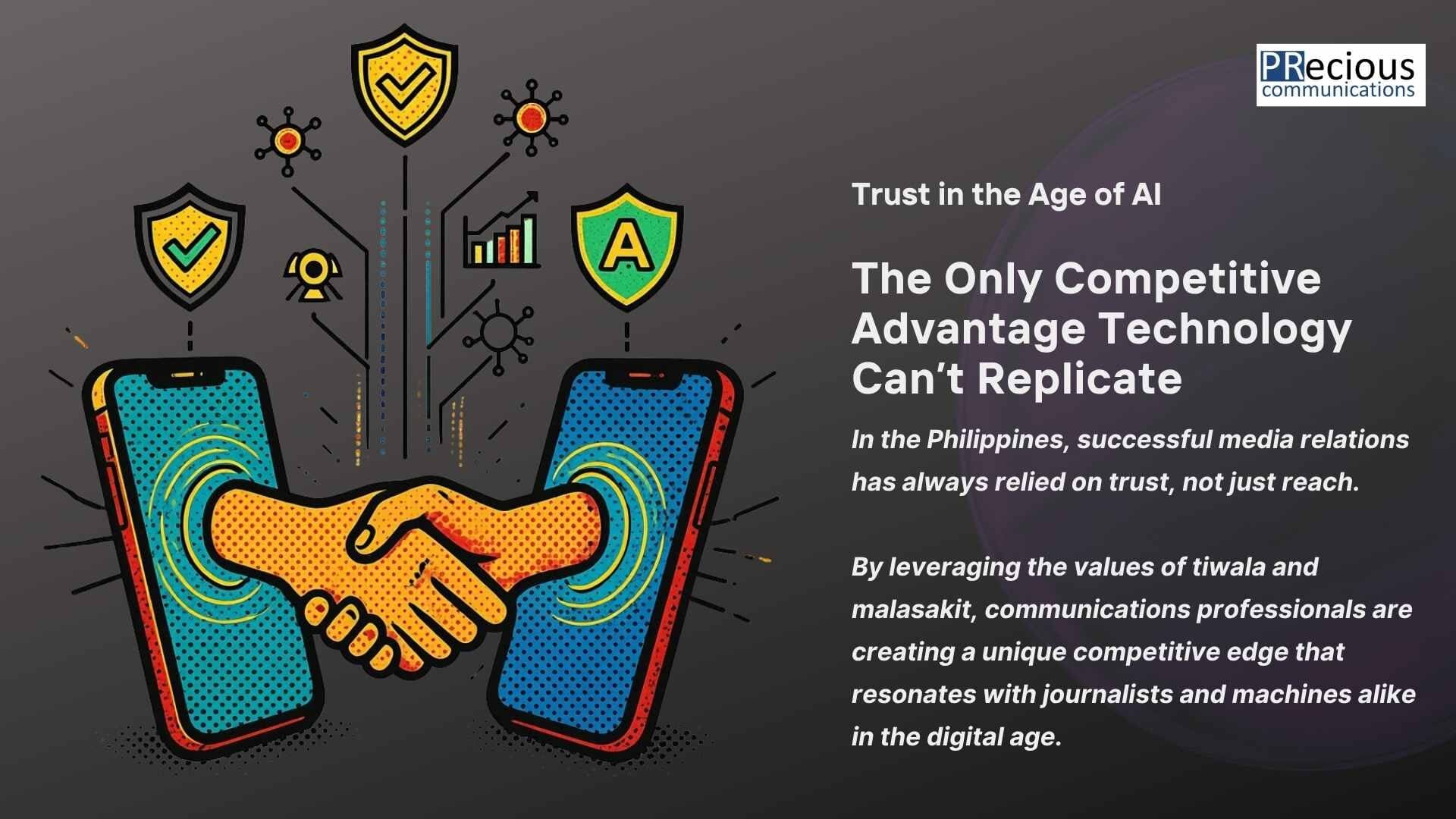
Trust is becoming one of the most valuable business assets organizations can build. As audiences become more discerning and information becomes increasingly abundant, stakeholders are relying less on corporate messaging alone and demanding independent audits, data-backed communications, and third-party validation to inform their decisions. Basic authenticity is no longer enough; it is being replaced by verifiable integrity.
To navigate this, brands must shift from relying on massive celebrity endorsements to adopting a decentralized influence architecture. Real influence is migrating to “Dark Social”—closed chat groups and curated environments led by mid-tier and micro-influencers. Simultaneously, empowering subject matter experts and founder-led storytelling is breaking through the digital noise, offering unpolished, human narratives that AI cannot replicate.
“We’re entering an era where stakeholders have more information than ever before, but also more reasons to question what they see. Trust will increasingly be shaped by independent validation, credible voices, and consistent actions rather than by what organizations say about themselves. The brands that invest in credibility today will be better positioned to earn confidence tomorrow,” said Alba.
Lean Teams Demand More Strategic PR Partnerships
Businesses today are being asked to do more with fewer resources. Communications teams are managing a growing range of responsibilities—from executive visibility and reputation management to digital engagement and crisis preparedness—often within lean organizational structures.
This reality is reshaping expectations around agency partnerships. With lean in-house teams managing increasingly complex, multi-dimensional responsibilities, corporations are actively moving away from agencies that only offer transactional, execution-only services. Increasingly, organizations are seeking advisors that can provide high-level strategic counsel, business perspective, predictive risk analytics, and integrated communications expertise.
The value of a communications partner will be measured not simply by outputs delivered, but by their ability to help organizations navigate complexity, anticipate risks, and identify opportunities.
Looking Ahead
The second half of 2026 is expected to challenge organizations to rethink how they build relevance, earn trust, and sustain growth in an increasingly interconnected business environment. While technologies, platforms, and stakeholder expectations will continue to evolve, the underlying shift is clear: communications is becoming a central component of business strategy.
“The question is no longer whether communications has a seat at the table. The question is how effectively organizations are leveraging it to strengthen reputation, drive growth, and create long-term value. The businesses that understand this connection will be better positioned to lead in the years ahead,” Alba concluded.
Ready to Turn Your Communications into a Revenue Driver?
Operating in the Philippines today means competing for attention against aggressive, digital-first international players. Winning H2 2026 requires a “Glocal” approach: unifying enterprise-level regional strategy with hyper-local cultural dexterity.
Whether you are a Philippine enterprise scaling across Southeast Asia, or a global technology leader securing stakeholder trust in Manila, PRecious Communications, APAC’s Most Innovative Agency, brings the regional firepower you need. With active hubs across Singapore, Indonesia, Malaysia, Thailand, Vietnam, Australia, and the Philippines, we help ambitious brands architect influence that moves markets.
Let’s replace transactional “spray and pray” tactics with high-conviction narrative engineering. Contact the PRecious Philippines Corporate & Growth Advisory Team to explore how our cross-border network can accelerate your market relevance.
Contact the PRecious team today to discuss your communications strategy.