*** This article was originally published by Lars Voedisch on LinkedIn.
For the past two years, most corporate AI communications followed the same playbook. Big announcements. Big partnerships. Big promises. Every company suddenly became “AI-powered.” Every product became “AI-enabled.” Every leadership team talked about transformation, productivity, and the future of work.
At ATxSummit 2026 in Singapore from 20-21 May, the tone felt noticeably different. There are still the mega announcements. But overall, the AI conversation is maturing.
Less hype. More realism. Less obsession with model size. More focus on deployment, governance, operational friction, and accountability.
And that shift matters enormously for communications and marketing teams. Because the challenge is no longer just how companies use AI. It is increasingly how they talk about it.
The Era of AI Theater Is Ending
One of the clearest signals from the summit was that the market is moving beyond AI theater.
For the last 18 months, much of the AI conversation was driven by visibility economics:
- Who announced first
- Who sounded most innovative
- Who attached themselves most aggressively to the AI narrative
But as AI moves deeper into operations, stakeholders are becoming more skeptical and more practical. They want to know:
- What actually works?
- What creates measurable impact?
- What are the governance risks?
- What happens to employees?
- Who is accountable when things go wrong?
That changes the communications challenge significantly. AI can no longer be positioned purely as an abstract innovation story.
It increasingly becomes:
- a trust story,
- a governance story,
- a workforce story,
- and an operational credibility story.
The “Lower-Value Human Capital” Statement Was A Timely Warning Sign
One of the clearest examples came outside the summit itself. Around the same time, Standard Chartered’s Group CEO faced backlash after comments referencing “lower-value human capital” in discussions around AI-driven restructuring.
The controversy was revealing. The issue was not that companies pursue efficiency. Businesses have always looked for ways to do things faster, cheaper, or more productively through outsourcing, automation, and technology.
What triggered the reaction was the framing. The phrase sounded less like transformation and more like people being categorized according to economic utility. And that matters because AI already creates underlying anxiety around displacement, relevance, and control.
Communications teams therefore need to recognize that AI messaging is no longer interpreted purely through an innovation lens. It is increasingly interpreted through a human lens.
Employees are not only listening for what companies automate. They are listening for what leadership believes about people.
AI Communications Is Moving From Excitement To Accountability
Several speakers at the summit reinforced this broader shift. OpenAI’s Chief Revenue Officer, Denise Holland Dresser, noted:
“The ability to deploy new capabilities is the new bottleneck.”
That statement reflects an important transition in how AI is discussed publicly. For years, the narrative centered around capability: bigger models, faster infrastructure, and breakthrough performance.
Now the harder questions are emerging:
- Can organizations operationalize AI responsibly?
- Can they govern it?
- Can they integrate it safely?
- Can they manage cost and data exposure?
- Can they maintain trust?
This is where communications teams need to evolve too.
The old AI communications model often rewarded:
- scale,
- ambition,
- disruption,
- and aggressive positioning.
The next phase may reward:
- credibility,
- operational realism,
- transparency,
- and evidence of responsible implementation.
That is a very different communications environment.
AI Is Compressing Attention And Trust
Another observation from the summit may become one of the defining communications challenges of the AI era. As Ajay Banga, President of the World Bank Group reportedly noted:
“LLMs increasingly take the oxygen out of the room.”
That line captures something profound. AI systems compress discovery. They summarize information. They narrow exploration. They reduce how many brands, viewpoints, or sources people actively engage with.
Which means the future challenge for brands is no longer simply visibility. It is remaining credible and discoverable within AI-mediated environments.
For PR and marketing teams, this changes the strategic equation entirely. Traditional awareness alone becomes less valuable if AI increasingly intermediates what stakeholders see, trust, and prioritize.
Authority matters more. Credibility matters more. Consistency matters more. And empty AI buzzwords become easier to expose.
“This Is Not Software. This Is Dynamic.”
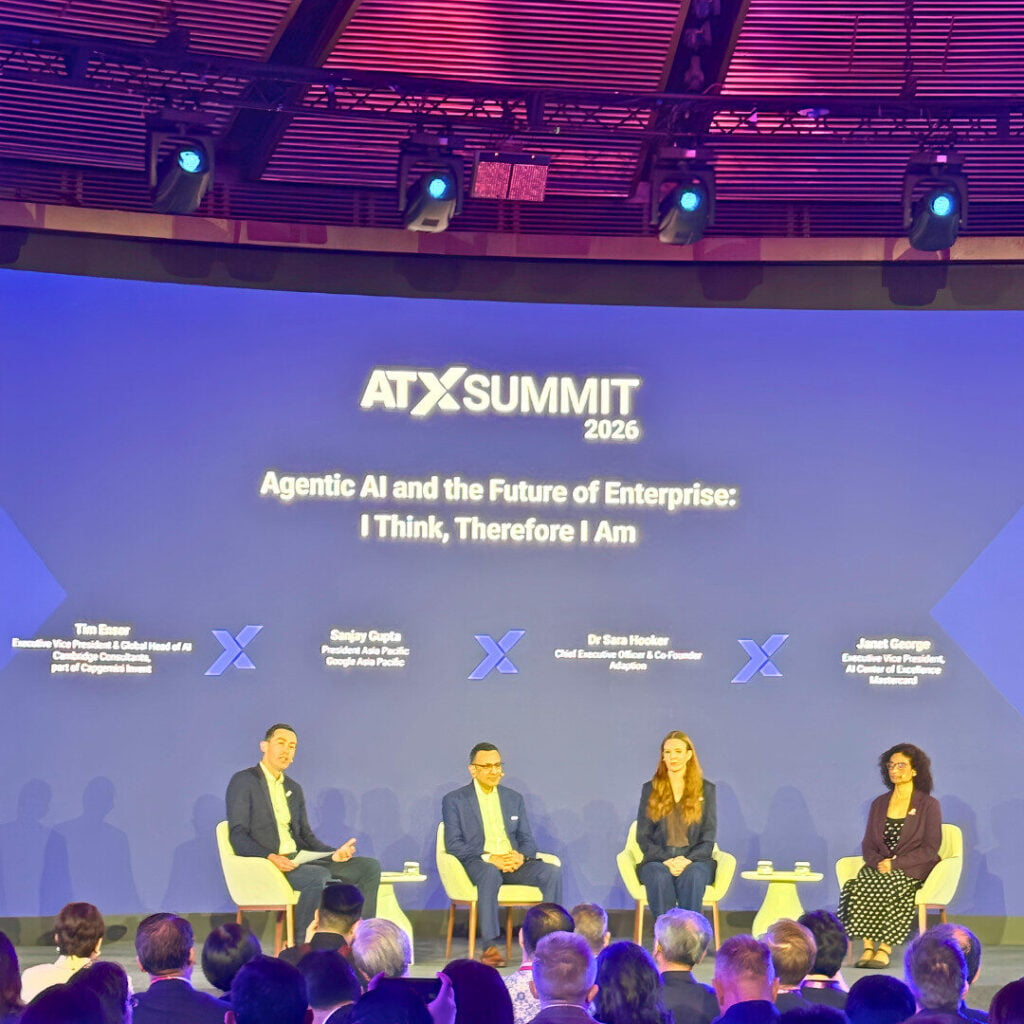
One of the most important warnings came from Mastercard’s Executive Vice President, AI Center of Excellence, Janet George, MSCS:
“This is not software. This is dynamic.”
That distinction is critical for communicators. Traditional enterprise software was largely invisible to external stakeholders. AI increasingly is not.
Customers interact with it directly. Employees experience it operationally. Investors evaluate it strategically. Regulators scrutinize it politically.
Which means AI communications cannot be separated from actual operational behavior anymore. If the AI experience breaks, the reputation narrative breaks with it.
That creates a dangerous trap for brands still over-positioning AI before operational maturity exists underneath. In previous technology cycles, organizations could sustain a gap between narrative and operational reality for quite some time.
AI compresses that gap dramatically.
What PR And Marketing Teams Need To Adapt To
The role of communications is changing in several important ways.
First, communicators need stronger literacy around governance, operational readiness, and AI limitations. Not because every communicator needs to become technical, but because credibility increasingly depends on understanding what is genuinely deployable versus what is simply marketable.
Second, the language around AI matters far more than many companies realize. Cold operational framing may make sense internally, but externally it can rapidly damage trust, particularly when discussing workforce transformation.
Third, communications teams need to move away from generic AI positioning. “AI-powered” is quickly becoming meaningless. The stronger narratives will increasingly focus on:
- practical value,
- measurable outcomes,
- operational trust,
- responsible deployment,
- and clear human impact.
Finally, communicators need to recognize that AI is changing the mechanics of visibility itself. In AI-mediated discovery environments, brands are no longer competing only for attention. They are competing for algorithmic trust.

Final Thought
Google’s President Asia Pacific, Sanjay Gupta summarized the broader challenge directly:
“If you don’t adapt and change, others will.”
For PR and marketing professionals, adaptation is no longer just about using AI tools more effectively. It is about understanding how the public conversation around AI itself is changing.
The era of AI hype is fading.
The era of AI accountability has started.
Close the Gap: The future of AI adoption rests on your narrative, not just your technology. Ready to shift your strategy from feature-hype to human-centric storytelling? Learn how to build lasting trust and accountability into your AI story.
Contact the PRecious team today to discuss your 2026 strategy.