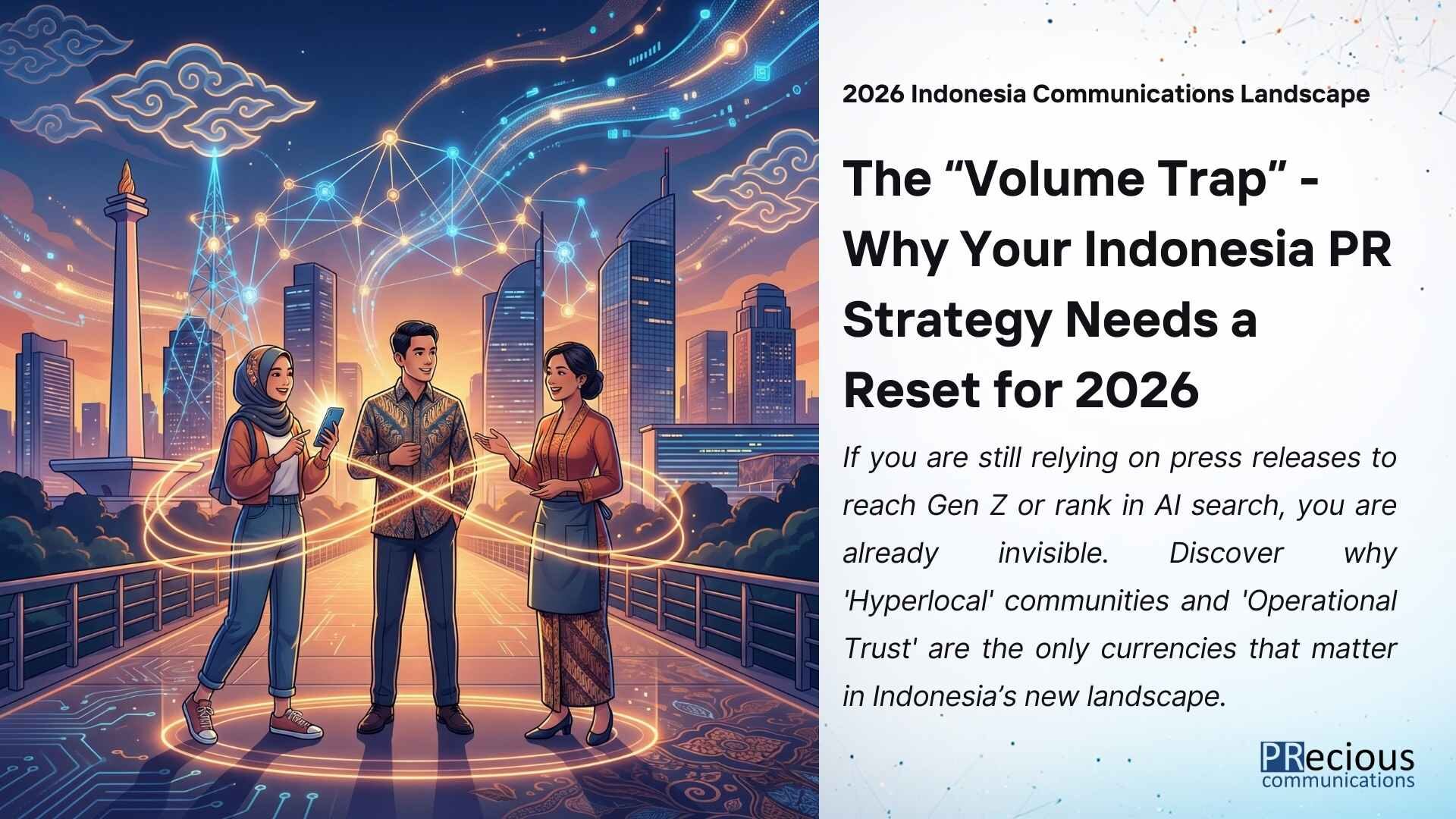
Indonesia is no longer a market where brands can survive on volume alone. For years, the standard metric for success in the market was simple. How many clips did we get? How wide was the distribution? Did we top the share of voice?
Key Takeaways (TL;DR)
• The Core Shift: Indonesian PR is moving from volume-based metrics (clip counts) to outcome-based trust management.
• The Risk: Brands relying on press releases for crisis management will fail against user-generated content and Gen Z scrutiny.
• The Solution: Adopt “Generative Engine Optimization” (GEO) to ensure your brand is cited by AI tools like ChatGPT and Perplexity.
In this Guide:
• The Problem: Why volume metrics (clips/share of voice) are failing in Indonesia.
• Strategy 1: The “Promote” Shift: Moving from coverage to stakeholder outcomes.
• Strategy 2: The “Protect” Shift: Replacing damage control with trust management.
• New Risk: Generative Engine Optimization (GEO) readiness for 2026.
• Future Trends: Gen Z, Regulatory Agility, and the Wellness Mindset.
As we move toward 2026, this volume-based approach is obsolete. In fact, it is dangerous.
At PRecious Communications, we see a fundamental change in how trust is built—and lost—in Southeast Asia’s largest economy. The era of generic press releases and reactive crisis management is over.
Here is the strategic shift required to succeed in a market defined by hyper-connected communities and a demanding Gen Z demographic.
The “Promote” Shift: From Media Coverage to Stakeholder Outcomes
The single biggest misconception leaders still rely on in Indonesia is the idea that promotion equals media coverage.
Too often, product launches or funding announcements are judged by the number of online news articles generated. Companies send out CSR updates in generic press release formats, while social media comments questioning the brand’s sincerity go ignored.
Why this fails:
- The Audience has Moved: Modern Indonesian audiences do not rely solely on news portals. They gather information from creators, closed communities, and employees.
- The CFO Doesn’t Care: Vanity metrics like “clip counts” do not convince CFOs or Country Heads. They are asking harder questions about revenue, pipeline health, and policy risk.
The 2026 Approach: You must treat PR as a stakeholder-outcome engine.
Instead of starting with a press release, start with the outcome. For example: “SME merchants must understand and try our new feature.” Only then should you design the content and channels.
- Co-Creation: Stop treating media and KOLs as mere distribution channels. Treat them as partners. Bring them exclusive data and insights to build stories together.
- Measure Behavior: Success is message pull-through, lead quality, and search behavior—not just the volume of mentions.
The “Protect” Shift: From Damage Control to Trust Management
The second obsolete strategy lies in how companies handle crises. The prevailing myth is: “If there is an issue, we just need a press release to control the narrative.”
Why this is dangerous:
In Indonesia’s hyper-social environment, screenshots, chat logs, and user-generated videos travel significantly faster than any corporate statement.
A legalistic, defensive response—often seen in banking or SOE cases—that attempts to avoid blame often makes the issue worse. Regulators and investors are not looking at your press release. They are judging how open, fast, and empathetic your operational response is.
The 2026 Approach: Crisis communication must be viewed as stakeholder trust management, not media damage control.
- Operational Alignment: Involve legal, HR, and client teams immediately. Your external promise must match your internal action.
- Readiness Assessment: Deploy a Crisis Comms Readiness Index regularly. Do not wait for a crisis to draft holding statements or build dark sites. Proactiveness is key for crisis anticipation.
- Monitor Sentiment: Track inbound complaints and retention rates in key accounts. These are your true protection metrics.
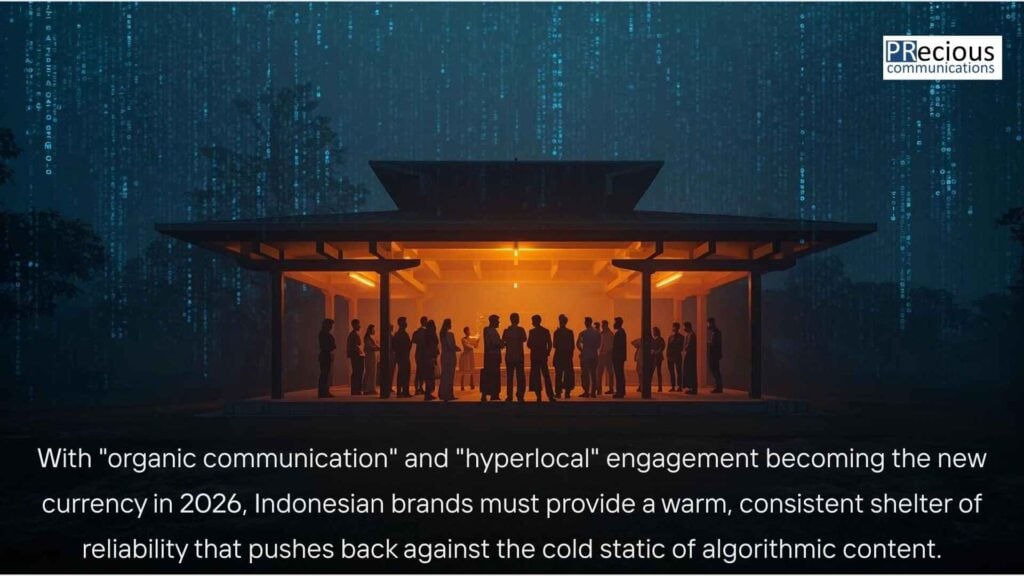
The Invisible Risk: Are You Ready for GEO?
There is a third shift that many leaders in Indonesia are missing: the rise of AI search.
We are entering the era of Generative Engine Optimization (GEO). When stakeholders ask AI tools about your industry, the answers are pulled from authoritative, credible sources.
If your brand lacks a clear narrative footprint in high-quality media, you may become invisible in these results.
The 2026 Approach: PR must now focus on securing placements that AI systems recognize as credible. This means using data, expert commentary, and clear facts to ensure your brand’s narrative is machine-readable as well as human-readable.
Three Hyperlocal Trends Shaping Indonesia
Beyond structural shifts, three specific cultural forces will define the market in 2026.
1. Gen Z as Agenda Setters
Younger Indonesians are no longer passive consumers. They shape the national agenda. From campus communities to meme accounts on TikTok, Gen Z drives the framing on critical issues like jobs, digital freedoms, and education. They demand authenticity.
2. Regulatory Agility
With a new government structure still taking shape, Indonesia’s regulatory environment remains fluid. Sectors such as finance, tech, and energy face a moving target. Strategies must be agile enough to pivot as coordination patterns between ministries change.
3. The Wellness Mindset
Health is no longer just for hospitals. Post-pandemic, Indonesians have integrated wellness into daily choices—from food and skincare to mental health and commuting habits. Brands across all sectors need to recognize this shift in consumer values.
Conclusion: Building Trust in a Distrustful World
Success in Indonesia requires moving beyond the “myth” of clip counts and controlling narratives.
It requires building an ecosystem where experiences, communities, and consistent storytelling create ongoing value. At PRecious Communications, we help brands move from transactional media relations to genuine stakeholder engagement.
The era of relying on clip counts and generic press releases is over. Your brand’s success in Indonesia now hinges on a strategic shift: moving from a “media coverage machine” to a Stakeholder-Outcome Engine.
Don’t wait for a crisis to expose an obsolete strategy, and don’t risk becoming invisible in the age of Generative Engine Optimization (GEO).
Take the Next Step:
Your competitors are already pivoting. To assess your readiness to engage with Gen Z agenda setters, navigate regulatory agility, and truly manage stakeholder trust, you need a partner with hyperlocal expertise.
Ready to future-proof your communications strategy for 2026?
Contact PRecious Communications today to schedule a private discussion on how to implement the Indonesia Playbook and begin building a system that measures real business impact—not just vanity metrics.