The Death of Vanity Metrics
What Clients Really Want from Communications
It’s Time to Lead with Integration and Insight
AI Won’t Replace Us – But It Will Demand More From Us
Find a Partner Who Gets It
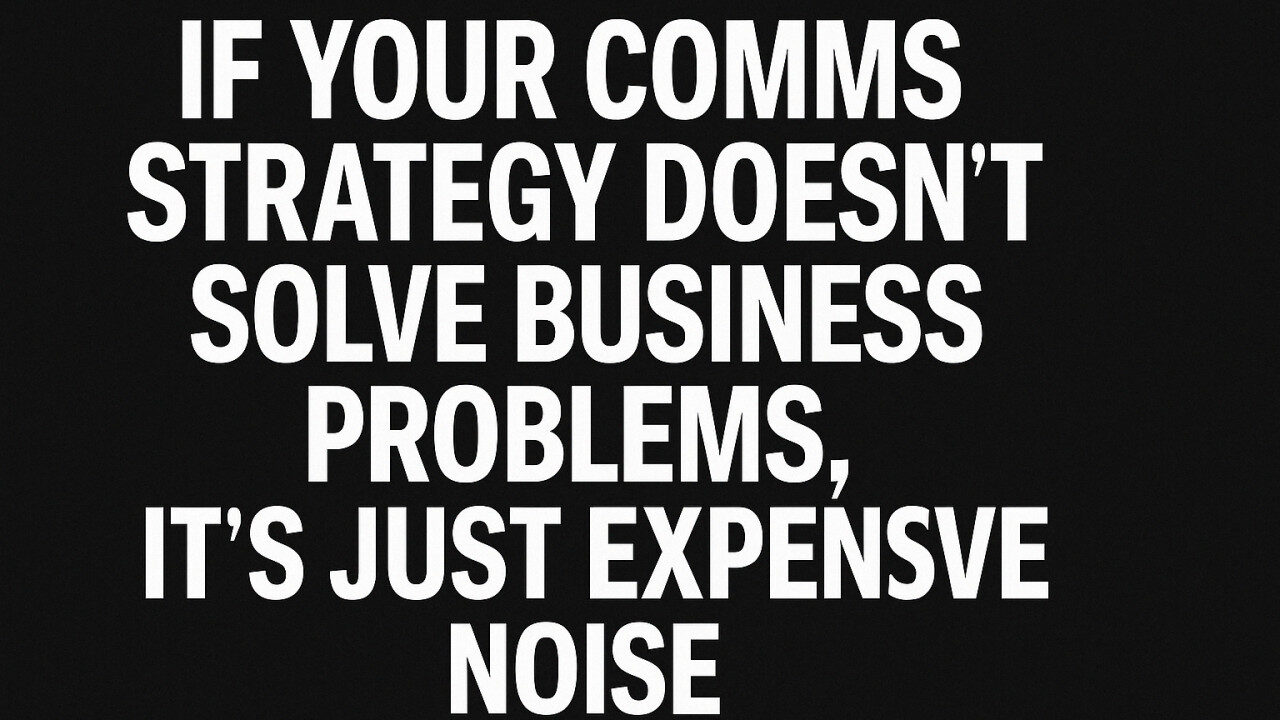
Let’s not sugarcoat it: communications that don’t tie back to business outcomes are a luxury most companies can no longer afford.
We’re in a new era. One where boards expect reputation to drive performance, not just presence. One where AI can generate decent copy in seconds – but can’t replace judgment, insight, or strategy. One where CMOs are asked not just to “build awareness,” but to move numbers: in recruitment, in retention, in revenue.
The message is clear: communications must evolve – or become irrelevant.
The old model is breaking down. For too long, we’ve let coverage = success. But media mentions, impressions, and awards are not outcomes. They’re inputs at best and distractions at worst.
If comms doesn’t solve problems, it’s vanity.
The problems businesses face today are complex and interconnected:
- Talent shortages and disengaged employees.
- ESG scrutiny and brand trust erosion.
- Market expansion with unclear positioning.
- Digital noise drowning out purpose.
- Global trade flow disruptions
These aren’t solved by press releases alone. They’re solved by strategic communications rooted in understanding business dynamics.
From our leadership conversations and agency experience, we’re seeing the same shift across industries. Today’s clients want:
✅ Partners who connect narrative to outcome, not just content to channels
✅ Support in reputation risk, brand transformation, hiring, and market entry
✅ Teams that bring not just creativity, but consulting, analytics, and commercial acumen
✅ Dashboards that measure impact, not just activity
This is what we must evolve into: trusted advisors, not tactical vendors.
To stay relevant, PR and communications must:
- Integrate earned, owned, paid, and shared media into single-minded strategies.
- Productize offers like ESG audits, advisory sprints, and investor comms playbooks.
- Train thinkers, not just doers – consultants who understand growth and risk.
- Connect campaigns to dashboards, showing how reputation impacts the bottom line.
PR is no longer just about the story you tell — it’s about the impact you create.
Yes, AI can write. It can summarize. It can automate.
But it cannot replace the value of human insight, cross-functional leadership, or cultural intelligence. What it will do is make traditional delivery faster — and commoditize the basics. Which means our edge comes from going upstream: solving the right problems, with the right thinking, at the right time.
In a world awash with content and metrics, the real differentiator is strategy.
So here’s the challenge: find a partner who understands your business — not just how to amplify your messages. One who sees your communications function not as a cost center, but as a driver of trust, alignment, and long-term value.
The agencies that survive won’t be the loudest. They’ll be the ones that solve the right problems.
Let’s make comms matter again.